Industrial laundries

Water reuse in industrial laundries, even across a mixed washer fleet

Retrofit your floor per line or per site, keep the machines you already own, and recover most of your wash water and its heat. We are vendor-neutral, so the recommendation follows your plant, not a single brand's catalogue.

75 to 90%

of wash water is typically recoverable, with the final rinse usually kept on fresh water

4 bills

water, sewer, gas, and detergent: reuse touches all four, so the case grows as any of them rise

0 machines replaced

reuse is retrofitted around the equipment you already run, whatever the brand

Water reuse in industrial laundries means treating wash and rinse water on-site so it goes back into the process instead of down the drain. Most plants recover roughly 75 to 90% of their wash water, keep the final rinse on fresh water for quality, and recover heat at the same time. You do not need to replace your machines. A per-line or per-site retrofit treats the whole floor, including washers from different brands and older machines that never shipped with a reuse module. The right system depends on your linen, your soiling, and your water and energy prices.

Your washers came from different makers. Your water bill didn't.

Most laundries grow their floor one purchase at a time. The result is a mixed fleet: tunnel washers and washer-extractors from several manufacturers, plus older machines bought before water reuse was on anyone's spec sheet.

When water and discharge costs climb, the natural first call is the company that sold you the machines. That supplier can usually offer a reuse module for its own equipment. It cannot recycle water for the machines it did not sell, and it has no reason to recommend anything outside its own range.

So you get a quote that covers part of your floor and leaves the rest on mains water. The bill keeps running.

Treat one machine, one line, or the whole floor.

There are three places to recover water, and the right one depends on how your plant is laid out, not on which brand you favour.

SetupWhat it coversWater recovery (manufacturer figures)Best fit
Per-deviceOne machine at a timearound 35%a single new machine with a built-in module
Per-lineOne wash line or tunnel-washer loopmid-rangea defined high-volume line
Per-siteThe combined effluent from the whole floorup to about 85%mixed fleets, multiple brands, older machines

Manufacturers publish these recovery figures themselves: single-machine setups land near 35%, while centralized per-site systems reach up to about 85% because they treat the combined flow rather than one drain. A per-site retrofit is not inherently more efficient than a good per-device module on a like-for-like basis. It simply captures water across machines a per-device module never touches, which is exactly what a mixed fleet needs.

What water reuse in industrial laundries actually involves

Collect, treat, return.

Wash and rinse water is collected from the machines and screened to pull out lint, hair, and grit. It then passes through filtration, often micro, ultra, or nanofiltration, or a ceramic membrane, to strip suspended solids, oils, and surfactants.

Ultraviolet light and ozone, or a bioreactor stage on heavier loads, complete the treatment loop. The treated water returns to the wash and early rinse stages. The final rinse normally stays on fresh water as a quality safeguard.

Because the loop runs continuously, soiling is removed from circulation instead of building up. Operators often report wash quality holding steady or improving once a system is correctly sized.

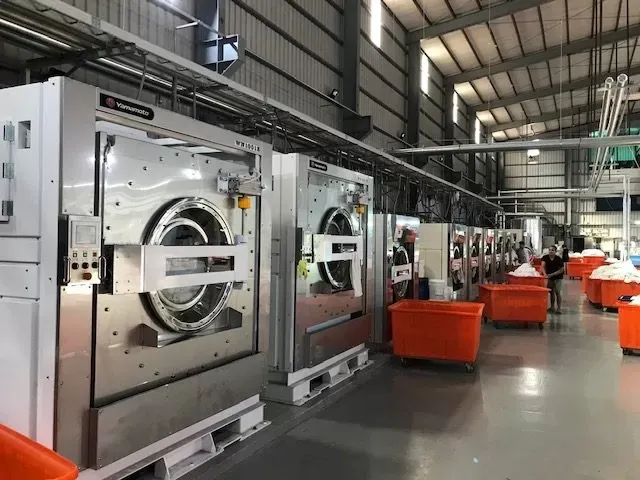
Industrial laundry wash aisle with a tunnel washer and mixed-brand washer-extractors

The savings are not just on the water meter.

Reuse cuts the water you buy and the effluent you discharge at the same time. Recycling the last rinse alone can save roughly 30% of the supply charge and 15% of the effluent charge on a two-wash, two-rinse setup, before any deeper treatment is added.

Energy is the quieter win. Recycled water comes back warm, so you reheat a small temperature gap rather than heating cold mains water from scratch. Dryer and effluent heat recovery can be added to the same project.

Softer recovered water can also reduce detergent dosing. Put together, that is four cost lines moving in your favour, which is why the payback case strengthens every time a utility raises a tariff.

2 to 4 years

typical payback for a full reuse retrofit on a laundry floor, often at the shorter end where water, sewer, and energy prices run high. We model yours on your own invoices, not a generic figure.

Done right, the load comes out the same or cleaner.

The two questions operators raise most are wash quality and total dissolved solids building up over many cycles. Both are managed by design: correct membrane selection controls dissolved solids, and keeping the final rinse on fresh water protects the finish.

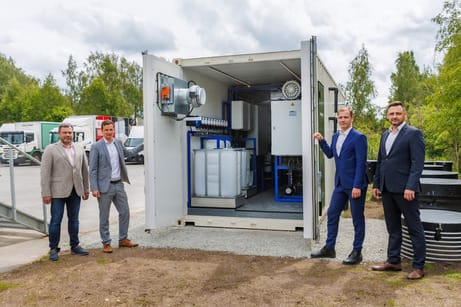
Footprint is the other real constraint. On-premise laundries with no spare room near the wash aisle sometimes cannot fit a system indoors. Where space is tight, containerized or compact bioreactor units can sit outside the building. Picking hardware that fits the room is part of the job.

We have no brand to defend, so we can cover your whole floor.

We are not a manufacturer. We assess the routes across the manufacturers we work with, then recommend the one that fits your linen, your layout, and your numbers. On a mixed fleet that matters, because no single OEM's module was built to recycle a competitor's machines.

Closed-loop water reuse system at an industrial textile-service laundry
Laundry

Water reuse: 70%

Textile-service laundry (Estonia)

A textile-service laundry in Estonia needed to cut freshwater use and wastewater discharge ➜ installed a closed-loop reuse system with an activated-sludge bioreactor, automated filtration, and continuous quality monitoring ➜ 70% of process water reused on-site and ~25,000 m³ of fresh water saved per year, with treated water exceeding tap-water quality. Reported as the largest industrial water-reuse system in its country.

Inline process-water recycling installation at a commercial laundry
Laundry

Payback: 0.8 years

Commercial laundry (Oslo)

A commercial laundry in Oslo wanted to lower water use and optimise wash chemistry ➜ installed an inline process-water filter that recycles all laundry water, with cloud-based remote monitoring ➜ water use per kg of textile fell 37% and ~4 million litres of fresh water were saved in one year. Rising local water prices cut payback from a projected 3 years to 0.8 years, while wash times dropped 33%.

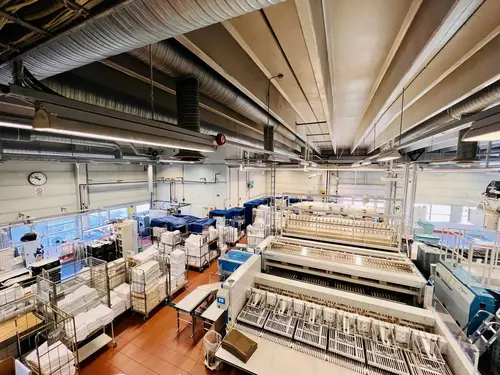
High-capacity resort industrial laundry with water-efficient tunnel washing line
Hospitality

Water saving: 35%

Resort industrial laundry (Spain)

A theme-park resort needed a 15 t/day industrial laundry built from scratch in five months to serve its hotels, under strict sustainability targets ➜ installed a turnkey tunnel-batch washing line with water recirculation, heat recovery, and lint filtration, running recycled-polyester garments at lower temperatures ➜ 35% less water and 25% less energy than conventional operations, at full resort throughput.

These are the partners and the calibre of work we would shortlist for a site like yours. The recommendation answers to you, not to a catalogue.

Find out what your floor could reuse.

Send us your fleet, your linen mix, and a recent water bill. We come back with the routes worth considering and a payback modelled on your own numbers. No obligation, and no preferred brand.

FAQ

Frequently asked questions

Does recycled water get the load as clean?

Yes, when the system is sized correctly and the final rinse stays on fresh water. Treated wash water is filtered to process quality before it returns, and most plants keep the last rinse on mains water as a safeguard. Filtering process water inline also removes soiling from circulation, so wash quality usually holds or improves.

Will this work if my washers are from different brands?

Yes. A per-site retrofit treats the combined effluent from your whole floor, so it does not matter whether your washers come from one maker or five. This is the main reason a brand-agnostic retrofit fits mixed fleets better than a single manufacturer's per-machine module, which only recycles water for its own equipment.

Do I have to replace my machines or buy my washer maker's reuse module?

No. Reuse is added as a retrofit around your existing machines, not inside them. Older washers and machines that never shipped with a recycling module can still feed a shared per-line or per-site system. Replacing equipment is only worth discussing if a machine is already due for renewal anyway.

How much of my water can I actually reuse?

Most industrial laundries recover roughly 75 to 90% of wash water, with the final rinse usually kept on fresh water. Manufacturer figures put single-machine setups near 35% and centralized per-site systems up to about 85%. Your achievable rate depends on linen type, soiling, and how much stays on fresh water.

How much floor space does a recycling system need?

It varies with flow, and space is a genuine constraint for on-premise laundries with no room near the wash aisle. A per-site system needs space for tanks, filtration, and UV or ozone finishing. Where the floor is tight, containerized or compact bioreactor units can sit outside the building, which is one reason hardware choice matters.

Does it save energy as well as water?

Yes. Recycled water returns warm, so you reheat a small temperature gap instead of heating cold mains water from scratch, cutting gas or electricity use. Recovering the last rinse alone can save around 30% of the supply charge and 15% of the effluent charge on a two-wash, two-rinse setup. Heat recovery can be added.

What is a realistic payback?

For a full water-reuse retrofit, expect payback in two to four years — often at the shorter end where water, sewer, and energy prices are high. The system hits four bills at once: water, sewer, gas, and detergent, so the case only gets stronger as tariffs rise. We model yours from your own invoices, not a generic estimate.

Who maintains the system and what if it goes offline?

A reuse system needs routine maintenance: filter changes, membrane care, and monitoring of treated-water quality. Smaller laundries that cannot staff this often choose a monitored-maintenance or service arrangement instead of running it in-house. We factor the maintenance model into the recommendation, since a system without upkeep loses both savings and wash quality.