Industrial WWTP retrofit

Industrial WWTP retrofit: from cost centre to returning asset

You already run a plant that treats water well enough to discharge. Every quarter you pay more for the same effluent, and every tonne of sludge costs more than last year. That is tariff and regulatory pressure, not operational failure. The question is whether the asset you already pay for can earn back part of what you spend on discharge fees, sludge hauling, and make-up water, instead of only keeping you inside your permit.

Up to 50%

of WWTP operating cost can be sludge management alone

€350 to €750

typical range per dry tonne of sludge hauled off-site, depending on destination and pre-treatment

Up to 3% of turnover

maximum penalty for serious discharge breaches under IED 2.0, once transposed in Spain

Returning asset

on-site reuse and better treatment can turn a cost centre into measurable savings

Industrial retrofit starts from a plant you already operate. You do not need a new WWTP. You need to compare whether the asset you already fund can perform better.

Is this for you? Quick self-check

Before you read on, see if any of these apply. If they do, keep reading. If not, your priority is probably elsewhere.

  • You already operate an on-site WWTP. This is not a greenfield plant.
  • The gap between what you discharge and what your permit allows has narrowed, even though production has not changed.
  • Sludge, chemicals, or municipal water costs have risen faster than revenue.
  • You are weighing capacity expansion, a technology change, or whether you should keep paying what you pay.
  • Your discharge permit or environmental licence comes up for review in the next two to three years.

If that fits, the next step is to compare routes on your own data, not market averages.

Starting point: an asset nobody reviews twice

Today you pay to comply. Retrofit asks whether the same asset can generate return.

Most sites treat their WWTP as solved paperwork: comply, pay, forget until the next inspection. But the same water you treat to discharge is, in many processes, water you could reuse in cooling towers, irrigation, or non-critical washes, cutting both make-up water purchases and discharge charges.

You do not need to redesign production. You need to line up your effluent, permit, and invoices against real technology routes and see whether any earn back part of the spend instead of only avoiding a breach.

Where it already shows up on your P&L

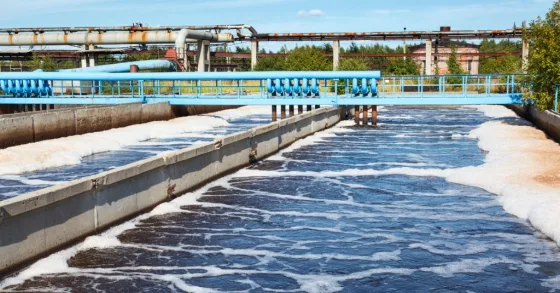
Industrial wastewater treatment basins with aeration

Discharge fees do not fall. They climb. In most jurisdictions industrial pricing depends on volume and effluent load, not flow alone. Tariff revisions are already on your invoice even when production is flat.

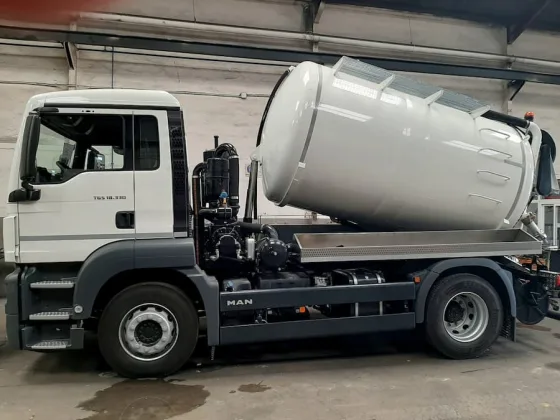
Tanker truck loading sludge from an industrial WWTP

Sludge management is the line that grows on its own. Removing one dry tonne typically costs €350 to €750 depending on destination and pre-treatment. At some sites that line alone is half total operating cost. Cutting sludge volume generated, not just treating it better, is where savings sit.

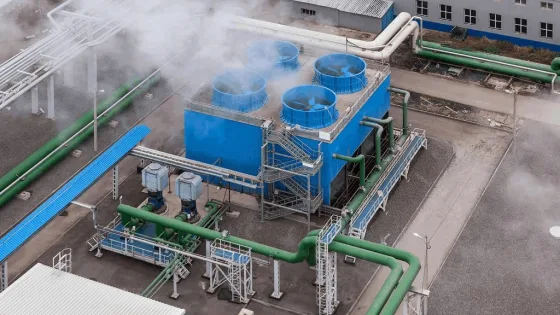
Industrial utility and cooling infrastructure at a plant

Chemicals and energy scale with load, not production. When effluent approaches permit limits, chemical dosing and aeration power rise to compensate, even with unchanged output. A silent cost that rarely appears as one line on the balance sheet.

Where is your highest volume and load? It depends on sector

SectorTypical volumeMain loadTreatment complexity
Textile (dyeing & finishing)High: washes and dyeingCOD 800 to 3,000+ mg/L, colour, salinityVery high; low BOD/COD ratio limits conventional biology
Pulp & paperVery highHigh COD from de-inking, suspended solidsHigh, especially integrated mills with own sludge line
PCB & surface treatmentLow to medium, batchMetals, low organic load, variable pHHigh; specific physico-chemical before any biology
Automotive (paint, phosphating)MediumMetals, oils, moderate CODMedium to high, similar to PCB

Indicative estimates by process type, not readings from your plant. The first step of any review is to replace this table with your lab data.

This page is the multi-sector hub. Sector pages (textile, pulp & paper, etc.) will link here and from here once published.

Discharge or reuse: same asset, different economics

Your existing WWTP can answer one of two questions first. The retrofit route and the ROI model are not the same.

Discharge path

Compliance with margin, not at the limit

This path fits when:

  • Effluent is creeping toward permit limits even though production is flat
  • You pay excess-load charges, tanker haulage, or reactive dosing to stay legal
  • A permit renewal or stricter enforcement is due in the next few years

Retrofit focus: Upgrade biology, sludge handling, or pre-treatment on the footprint you already have. The goal is stable effluent with headroom, not running the plant at its design edge every month.

Pays on: Sludge haulage, surcharge lines on your discharge invoice, and reagent spend that rises whenever load spikes.
Reuse path

Turn treated water into a running credit

This path fits when:

  • Municipal water and discharge fees together are a material monthly line
  • Cooling towers, washdown, or irrigation could take polished effluent today
  • Treated quality is already close to what non-potable loops need

Retrofit focus: Add polishing after your current WWTP: UF, RO, or a packaged train sized to a defined reuse destination, not abstract "water savings."

Pays on: Make-up water purchases and discharge volume, often at once. Cooling tower makeup is usually the first sink worth modelling on your invoices.

Many plants need both, in sequence: compliance headroom first, then reuse where quality and operations allow.

Reuse destinations to model

Reuse destinationVolume impactViability
Cooling towersHighStrongest route to start
Landscaping or exterior washdownLow to mediumSimple, little validation
Non-critical process washesMediumQuality validation required
Boilers and steamMediumExtra polishing (phase 2)
Return to product contactLow to mediumPhase 2 after prior route proven

You do not need a new plant

Most retrofits start from infrastructure you already have.

An existing tank or lagoon can serve as equalisation. From there: physico-chemical pre-treatment, DAF, or screening by sector; MBBR, SBR, or similar biology when BOD/COD ratio allows; UF or RO polishing depending on reuse destination.

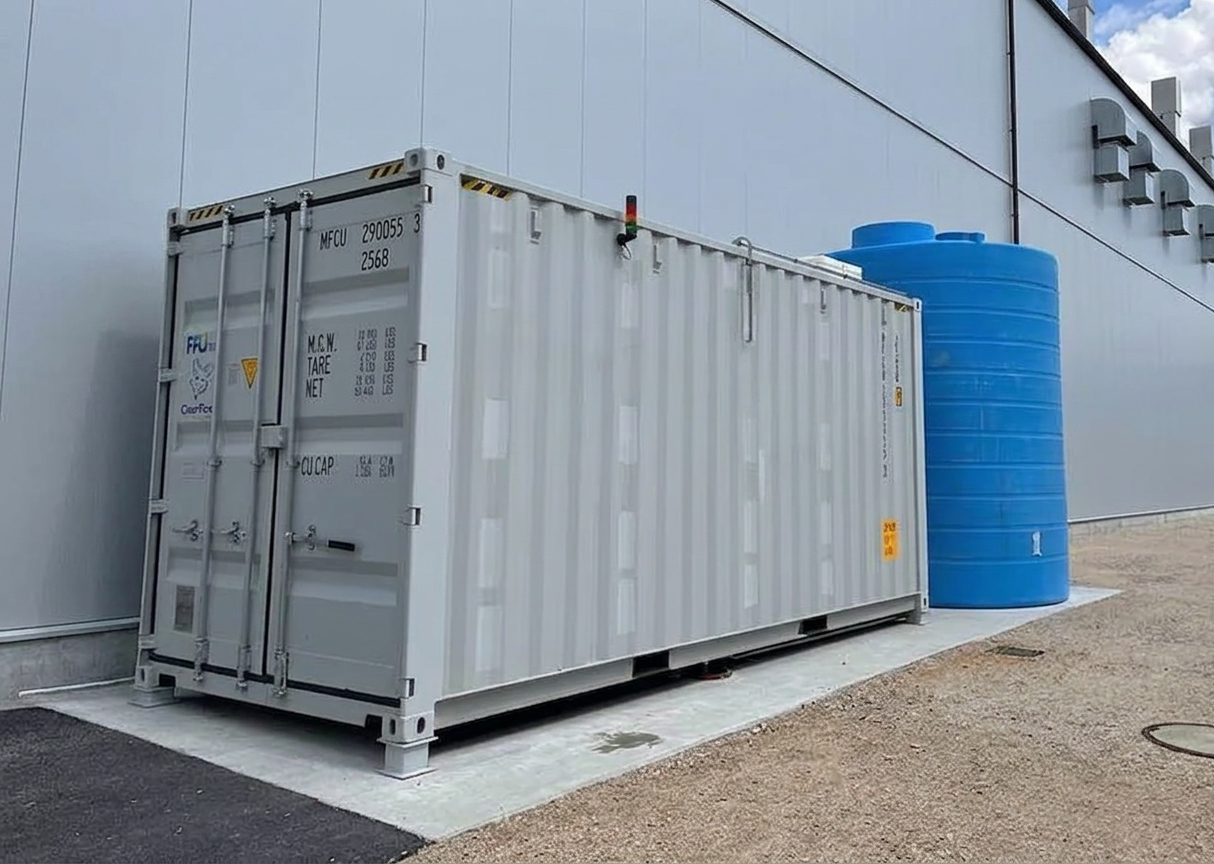
Packaged and containerised trains fit most industrial retrofits, especially when the immediate goal is to cut recurring off-site costs rather than reach exceptional purity.

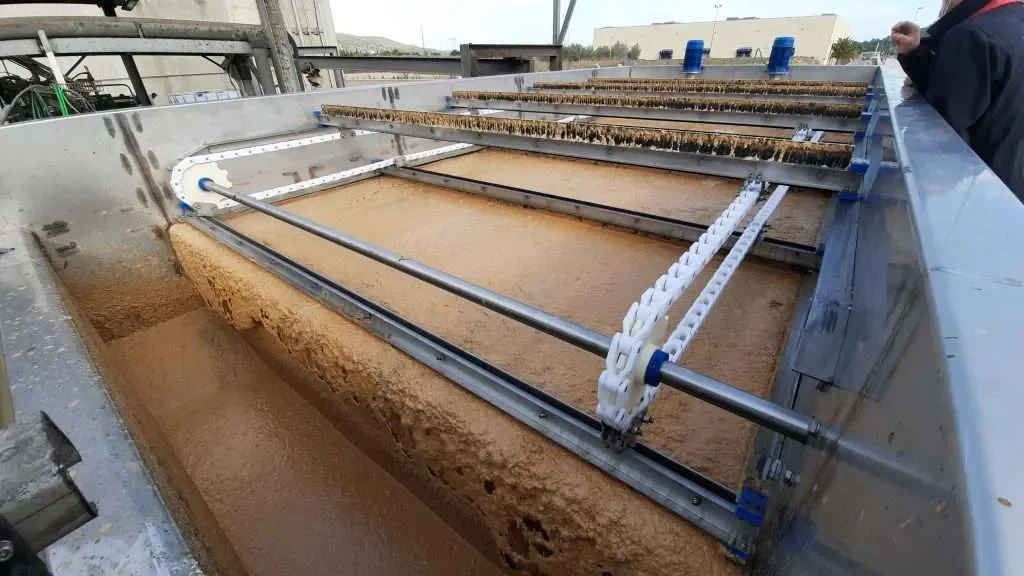
Industrial wastewater treatment plant in operation

Equalise

Existing tank

Pre-treat

Physico-chem / DAF

Biology

MBBR / SBR

Polish

UF / RO

Reference installs

Reference installs from manufacturers in our panel

Examples from our OEM network. These are published manufacturer outcomes, not brokered projects.

Containerised FBBR wastewater treatment unit integrated at an industrial site
Industrial Manufacturing

Outcome: performance restored

Rotating biological contactor upgrade

Germany

An existing rotating biological contactor was underperforming → retrofitted with a containerised FBBR stage integrated into the existing infrastructure → treatment performance restored without full reconstruction, at lower cost and shorter timeline than a greenfield replacement.

Above-ground industrial wastewater treatment tanks at a Spanish manufacturing site
Industrial Manufacturing

Outcome: no major civil works

Industrial WWTP biological upgrade

Spain

A Spanish industrial site needed an additional biological treatment stage for high-organic-load wastewater from canteen, sanitary, and process streams → installed a FBBR and lamella clarifier combination in above-ground AP-Tanks → fast commissioning without major civil works, and compliance with direct discharge limits.

Two real sequences: utilities first, product later

L'Oréal Waterloop (Burgos, Spain, from 2017): municipal water only for human consumption and product inputs; cleaning, steam, and cooling run on treated water in loop. By 2024, more than half the group's industrial process water came from recycled sources. Sequence matters: utilities and cleaning first, product contact only after validation.

In pulp and paper, ENCE's Pontevedra mill in Galicia is the clearest example. After environmental sanctions for discharges to the Ría de Pontevedra in the 1990s, the plant invested more than €40 million in environmental upgrades and now runs a totally chlorine-free (TCF) bleaching process. Same pattern as L'Oréal: start from either compliance pressure or efficiency, reach reuse in phases either way.

How it works

We narrow the market, you make an informed decision

500+ specialised vendors

Caskade compares solutions from our network of 30+ vendors based on your site and effluent data

The best solution for your site

Caskade requests and evaluates 3+ proposals on cost and technology.

Analysis

The effluent

Contaminant load, volume, variability

The site

Existing infrastructure, connection points

Possible uses for reclaimed water

E.g. process recirculation or non-potable uses.

Evaluation

5+technologies
Membrane-based
Physical/Chemical
Bioreactors
Conventional Biology
(Advanced) Oxidation
30+manufacturers

500+ in our databases

Comparison

3+ indicative proposals from specialised manufacturers

Possibly with different reclaimed-water use cases and/or technology routes

Recommendation

The most cost-effective and robust solution for your site and effluent

Financing options available in Spain, ask us

NEXT STEPS

From cost centre to a decision you can defend

1

Data capture

NO SITE VISIT

Effluent (volume, quality, variability), available space, and possible reuse destinations.

2

The report

Technology comparison, indicative OEM quotes, and a documented recommendation.

3

Selection

You reach the OEM with context, indicative pricing, and comparison criteria already done.

4

Installation

Lower water and discharge cost, permits anticipated, and an asset that performs in operation.

What you get

  • 3+ indicative quotes, from a panel of 30+ specialised European OEMs, filtered from a database of 500+.

  • Sludge haulage and discharge surcharge savings modelled alongside technology routes on your water and discharge invoices.

  • A documented recommendation you can defend to management. We connect you with the selected OEM.

  • Regulatory context: what rules apply to you and when.

Price

Free* if you can provide:

  • Your water and discharge bills (for return calculations)

  • A laboratory analysis of your effluent (for equipment design)#

*Manufacturers pay. #If you do not yet have lab analysis, we arrange it for a fixed fee. See FAQ for full pricing.

Start with your own invoice

Send your flow (m³/day or m³/month), water quality analyses if you have them, and a short process description. We return the highest-return routes with real OEM proposals compared on technology and economics.

FAQ

Frequently asked questions

If I reuse water inside my own process, do I need a permit?

When water is used and treated within the same process without leaving it, internal recirculation usually sits outside reuse-authorisation rules. Authorisation applies when treated water goes to a different use, even inside the same site. Rules vary by jurisdiction.

How long does a review take?

It depends on effluent complexity and how many technology routes are worth comparing. We confirm on the first call with your site data.

What if my environmental permit is due for renewal?

That is often the best moment to review treatment before renewal imposes stricter conditions. We can fold it into the same review.

What if we already ruled out reuse?

The review still works: we compare routes to comply with margin and cut operating cost even if treated water is only discharged.

Do we need new water sampling?

Not always. If you already know effluent parameters from your analyses or the current WWTP, extra sampling may not be needed. This is a desktop comparison exercise, not a field campaign.

How much does an Eval cost?

If you can provide your water invoices (so we can size the project and calculate the return) and a water analysis lab report, your Eval is free: the manufacturers we bring into the comparison pay us, not you. This typically applies to campsites, hotels, resorts, industrial laundries, retrofits of existing treatment plants and many industrial projects.

If you don't have a lab report yet, we arrange sampling and analysis as part of the Eval, at cost. Ask us for a quote.

Extended-scope projects (multiple sites, multiple effluent streams, tender specifications, financing documentation) carry fixed fees, which we share after a first call.

And on any paid Eval, we refund 50% of the fee when your project is installed through a manufacturer we introduced, within 12 months of delivery, for installations from 25,000 euros.