Industrial laundries and textile finishing plants
Technical guide · Updated June 2026
If you treat water at your plant in Spain and want to put it to a second use, one question determines whether you need a permit: does the treated water return to the same process, or does it go somewhere else?
If it returns to the same process, you sit outside the regulation and need no authorisation on that basis. If it goes anywhere else (floor washing, site irrigation, a separate process line, a cooling circuit), it becomes reclaimed water (agua regenerada) and you need two permits and a documented risk plan before you start.
This guide tells you where the line is, what the permits involve, what the deadlines are, and how the right treatment route is chosen once scope is confirmed. It is vendor-neutral: no manufacturer relationship shapes the assessment or the recommendation.
| In force | 24 October 2024 |
|---|---|
| Replaces | RD 1620/2007 |
| Authorised uses | 28 across 4 groups (urban, agricultural, industrial, other) |
| Core document | Plan de Gestión del Riesgo del Agua Regenerada (PGRAR) |
| Main deadline | 31 December 2028 (existing non-agricultural sites) |
| APS permit validity | 10 years, renewable up to 3 times |
| APS resolution time | Up to 12 months; no response = negative |
| Spain's current reuse volume | ~400 hm³/year (est. 15% of potential, MITECO 2022/27 data) |
This guide is written for plant directors, environmental managers, and facility operators at sites that treat or discharge water in Spain. It applies most directly to:
Industrial laundries and textile finishing plants
Tanneries and leather processors
Food and beverage manufacturers, breweries, and wineries
Meat processors and slaughterhouses

Chemical and paper manufacturers
Hotels, resorts, and campsites
.avif)
Industrial estates and multi-tenant parks sharing wastewater infrastructure
If you are an engineering firm or ESCO advising one of these clients, the scope test and permit structure sections apply directly to the sites you manage.
Scope is determined by the destination of the treated water, not by who treats it.
| RD 1620/2007 (derogated) | RD 1085/2024 (in force) | |
|---|---|---|
| Framework | Fixed quality limits by use type | Risk-based management (PGRAR per installation) |
| Uses covered | 5 broad categories | 28 specific uses across 4 groups |
| Recirculation scope | Not addressed | Explicitly excluded |
| Continuous monitoring | Not required | Mandatory turbidity monitoring for sensitive uses |
| Lab accreditation | Not specified | ISO/IEC 17025 mandatory |
| Permit structure | Single authorisation | Separate APS (production) + CRA (use) |
| Legionella | Not integrated | Explicit overlap with RD 487/2022 for aerosol uses |
| Adaptation deadline | Not applicable | 31 December 2028 for existing non-agricultural sites |
Basin authority resolves APS in up to 12 months. No response means a negative decision.
The 28 authorised uses fall into four groups:
Urban
Agricultural
Industrial
Other / Environment
Each use maps to a quality class in Annex I, which sets the microbiological and chemical thresholds, monitoring parameters, and minimum control frequencies. Confirm the permitted use and its class against the current Annex I text before designing any treatment system.
Subject to correct quality class
Human consumption is excluded entirely. Most food-industry contact uses are excluded, with only narrow exceptions for specific processing and cleaning steps defined in Annex I. Assume the use is excluded until confirmed otherwise; the cost of getting this wrong after hardware is procured is high.
New projects: no grace period. Permit required before operation.
| Date | What it means for your site |
|---|---|
| 24 October 2024 | RD 1085/2024 in force; RD 1620/2007 replaced |
| 31 December 2025 | Operators submit reuse volume data to the Observatorio de Gestión del Agua |
| New projects, now | Authorisation and concession must be in place before the reuse activity begins. No grace period. |
| 26 June 2026 | Spain submits updated reuse status report to the European Commission |
| 31 December 2028 | Existing non-agricultural facilities with a current permit must meet Annex I quality standards |
| Parameter | How it is checked | Higher quality class | Lower quality class |
|---|---|---|---|
| Flow | Continuous, on the line | Always | Always |
| Turbidity | Continuous (short rolling mean) | Tight numeric limit | Looser or per urban wastewater rules |
| E. coli | Accredited lab | Stricter limit, more frequently | Looser limit, monthly |
| Suspended solids | Accredited lab | Stricter limit, more frequently | Per urban wastewater rules |
| Somatic coliphages | Accredited lab | Required as virus indicator | Not required |
| Region | Primary drivers for water reuse |
|---|---|
| Catalonia |
|
| Valencia |
|
| Murcia |
|
| Andalusia |
|
| Balearic Islands |
|
| Route | Annex I classes | Typical capex | Energy | Footprint | Compliance complexity |
|---|---|---|---|---|---|
| Advanced biological + filtration + UV | Lower industrial | Lower | Moderate | Medium | Lower |
| Ultrafiltration + UV/ozone | Mid to high industrial | Moderate | Moderate | Compact | Moderate |
| Reverse osmosis + polishing | Strictest classes | Higher | Higher | Larger | Higher |
| MBR (membrane bioreactor) | Mid to high industrial | Moderate | Higher | Compact | Moderate |
Ranges vary with effluent quality and site conditions. Caskade models your specific configuration.
RD 1085/2024 sets the quality class. It is silent on how you reach it. That gap is where ten-year project cost is won or lost.
The short version
If treated water leaves its original process, you need two permits and a risk plan. The quality class and treatment route depend on what you do with it. The right route, chosen before hardware is bought, typically avoids the most expensive compliance mistakes.
Send us your site's basic details, the intended use for the water, and a recent water bill. We come back with:
No obligation. No preferred brand.
Free Project ReviewFAQ
Can I reuse wastewater at my factory in Spain without a permit?
Only if the water returns to the same process that generated it (internal recirculation), which RD 1085/2024 explicitly excludes from its scope. Any other reuse, directing treated water to a different use on the same site or off it, requires a production and supply authorisation (APS), a reuse concession (CRA), and a risk management plan (PGRAR) in place before the activity begins. Operating without them is an unauthorised use of the public water domain.
Does RD 1085/2024 apply if I recirculate water within the same process?
No. The regulation explicitly excludes internal recirculation. Water treated and returned to the process that generated it does not need an authorisation under RD 1085/2024. The definition of reclaimed water requires the water to be directed to a use different from the one that generated it. A wash stage that filters and returns its own water to the same wash stage, or a process loop with a polishing step feeding directly back to the same loop, is recirculation and sits outside scope.
My site treats its own wastewater. Does that make the treated output reclaimed water automatically?
No. Scope depends on where the treated water goes, not who treated it. A site operating its own treatment plant and returning the output to the same process remains outside RD 1085/2024. The moment that treated water is directed to a different use, even another line on the same site, it becomes reclaimed water and the regulation applies in full.
What is a PGRAR and who is responsible for it?
PGRAR stands for Plan de Gestión del Riesgo del Agua Regenerada. It is the risk management plan that forms the technical basis for the production and supply authorisation (APS). It identifies hazards across the production, supply, and use chain; defines the barriers and controls that keep risks acceptable; specifies monitoring parameters, frequencies, and analytical methods; and sets the corrective action protocol for deviations. Once the APS is granted, the PGRAR becomes the ongoing operating reference: volumes, quality results, alarms, and incidents go into a digital record. Responsibility sits with the APS holder, typically the site operator. External consultants usually draft it, but the operator is accountable for its accuracy and ongoing compliance.
Can I reuse treated wastewater in cooling towers in Spain?
Yes, subject to the quality class specified in Annex I for that use. However, any application generating aerosols (cooling towers, misting systems, spray applications) triggers the Legionella management regime under RD 487/2022 in parallel, adding in-situ monitoring of pH, temperature, conductivity, and disinfectant residual to every sampling event, plus a separate Legionella spp. culture schedule. Factor both the quality requirements and the monitoring overhead into the project cost before committing to a cooling tower application.
Can reclaimed water be used in food industry processes in Spain?
Only in specific, narrowly defined circumstances. Most food-contact uses are excluded under RD 1085/2024. Some non-contact cleaning and processing steps may qualify under the appropriate Annex I quality class, but this must be confirmed against the current Annex I text before any system is designed. For food-industry applications, assume the use is excluded until confirmed otherwise.
How long does the production and supply authorisation (APS) last?
Ten years, renewable for up to three further equal periods, a maximum total of 40 years of continuous authorisation. Applications by legal entities must be submitted electronically. The basin authority has up to 12 months to resolve. No response within that window is a negative decision. The application must include a description of the proposed system, the PGRAR, geographic coordinates of the reclaimed water delivery points, and the self-monitoring programme.
I already hold a water concession. Do I need a new one to start reusing reclaimed water?
Generally not. Where you hold a concession for natural water abstraction and want to substitute some or all of that volume with reclaimed water from your own treatment, the standard approach is to modify the existing concession rather than apply for a new one. The specifics depend on your existing concession terms and your basin authority's process. Confirm before initiating paperwork. Applying for a new concession unnecessarily prolongs the timeline.
What does the 31 December 2028 deadline actually require?
It applies to existing non-agricultural production and supply facilities that already hold a permit under the old RD 1620/2007. By that date, those installations must meet the Annex I quality standards of RD 1085/2024. New projects do not benefit from this transition: permits must be in place before operation begins, and there is no grace period for new starts.
Does RD 1085/2024 require monitoring for pharmaceuticals or emerging contaminants?
The regulation requires the PGRAR to assess risks from emerging contaminants, including pharmaceuticals, hormones, and industrial chemical residues, based on the specific water source and intended use. There are no universal fixed limits for most emerging contaminants in the current Annex I. In practice, the PGRAR must document why a given contaminant is or is not a material risk for the system, and if it is, what the control barrier is. For uses where emerging contaminants are a realistic concern, particularly where the source is municipal WWTP effluent used near food or with public contact, expect both the basin authority and the health authority to scrutinise this section during APS review.
How much does a water reuse project typically cost in Spain?
Total cost depends on scale, effluent quality, intended use, and the treatment route chosen. As rough orientation for industrial SME projects: feasibility study and PGRAR preparation typically run €8,000 to €25,000 depending on complexity; permitting support (technical preparation for APS/CRA submissions) €5,000 to €15,000 in addition to administrative fees, which are typically low; treatment installation €50,000 to €500,000 or more for most SME industrial cases, depending on flow volume, the quality class required, and whether partial treatment already exists on site; ongoing monitoring and accredited lab analysis €5,000 to €20,000 per year depending on quality class and sampling frequency. These ranges are wide because effluent complexity and quality class drive cost more than site size alone. We model the specific cost against your water data and invoices before any hardware is committed.
When does water reuse make economic sense?
The case for water reuse is worth analysing seriously when one or more of the following apply: your combined water purchase and effluent discharge cost exceeds roughly €3/m³, the threshold at which most industrial treatment investments reach payback within five to seven years at moderate reuse rates; your site faces seasonal restrictions, drought curtailments, or concession renewal risk on natural water abstraction; you face discharge permit tightening anyway, so treatment investment is coming regardless and reuse recovers value from it; water is a production continuity risk through single-source dependency in a water-stressed basin; your ESG reporting, customer requirements, or financing terms include water intensity targets that reuse directly addresses; or you have tanker removal costs for effluent disposal that reuse can eliminate. The economic case rarely rests on water tariff alone. Discharge savings, tanker elimination, avoided production downtime, and supply security all contribute. We model the full picture against your bills rather than using sector averages.
What happens if I operate a reuse activity without a permit?
Operating without the required APS and CRA is an unauthorised use of the public water domain under the Texto Refundido de la Ley de Aguas. Consequences can include fines, suspension of the activity, and an obligation to restore prior conditions. Under IED 2.0 once transposed, serious environmental breaches carry penalties up to 3% of annual turnover. Beyond the regulatory exposure, an unpermitted system cannot be demonstrated as compliant to clients, insurers, or downstream users of the site.
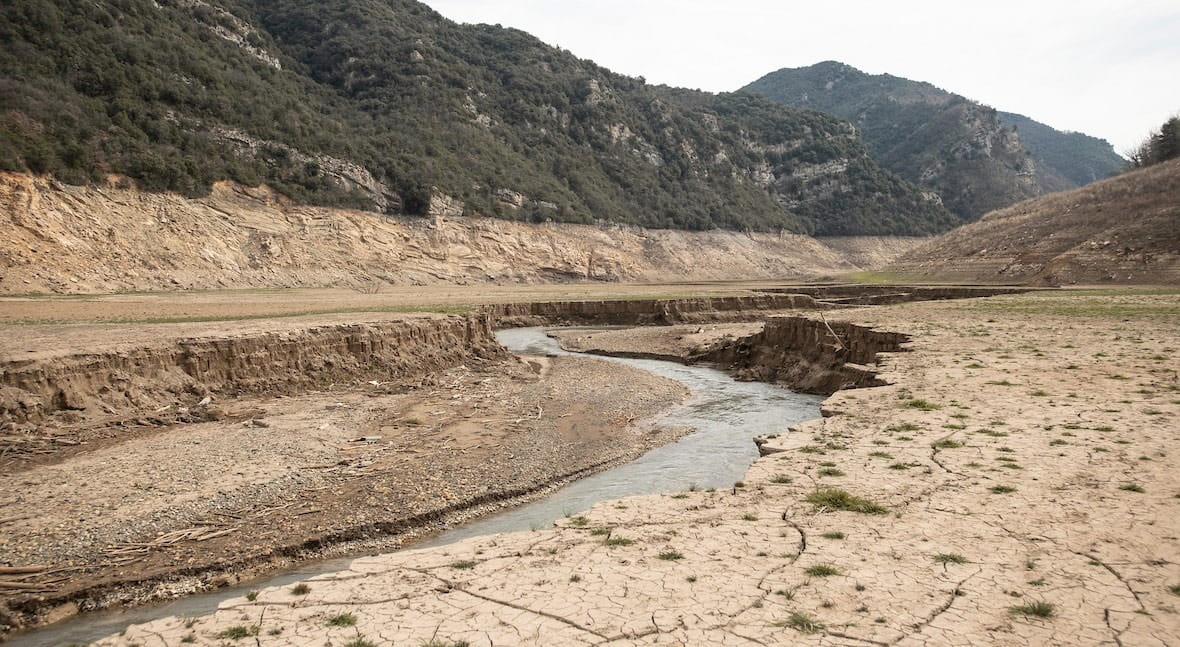
How ACA tariff trends change the reuse business case.
Blog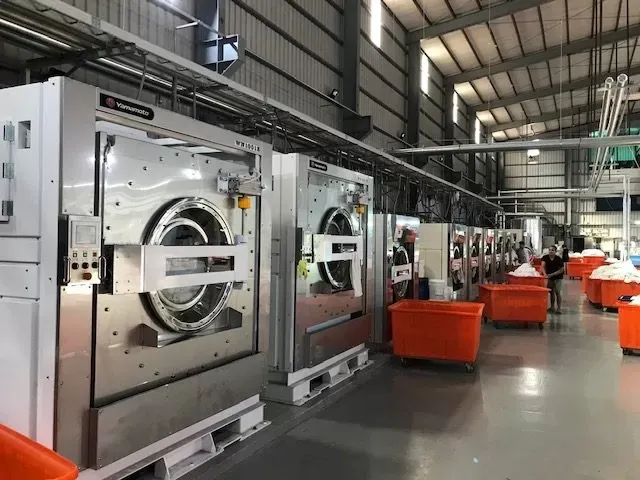
Scope test, recirculation vs reuse, and route comparison.
Solutions
Annotated case diagrams and scope guidance from the ministry.
External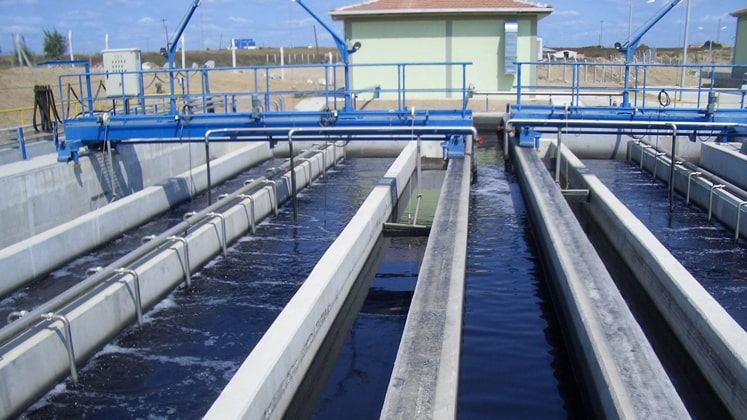
Send your site details and water bill for a vendor-neutral review.
Free project reviewSources: RD 1085/2024 (BOE-A-2024-21701); MITECO FAQ on RD 1085/2024 scope (October 2024); Planes Hidrológicos 2022/27 (MITECO); La economía circular y el sector del agua en España (2023); Implementing Decision 2022/2508 (Textiles BAT conclusions); Directive 2024/1785 (IED 2.0).